…And I kind of don’t even like them!
Or at least, there’s a part of them I love and a part of them I’m really bad at and gets in the way sometimes.
The part I love is the exploration. Adventure games do exploration really well. Whether it’s the immediately open world of Quest for Glory 1 or the more confined but very interesting places you find in Space Quest 3, I really like milling about and interacting with things.
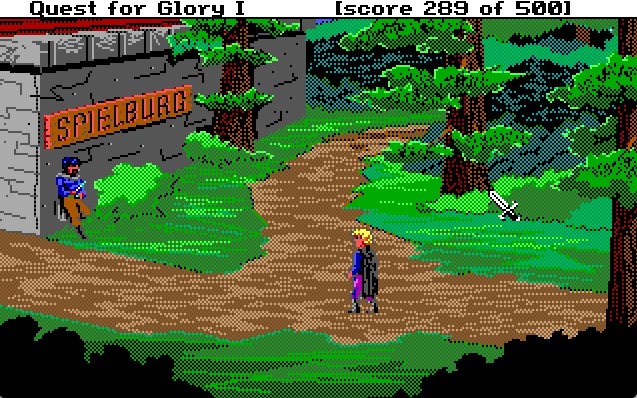
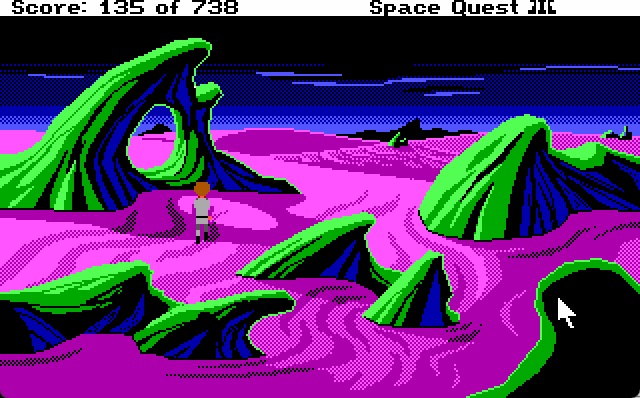
The part I don’t like? Mostly, the puzzles, honestly. I’m very bad at adventure games and I get stuck ALL THE TIME. I was recently playing Thimbleweed Park and I have to say I really had fun with the first two chapters. I loved exploring Thimbleweed and talking to the locals and the mystery. It had magic to it. I even got stuck on a few puzzles, but it wasn’t too bad. In fact, I loved the game and was excited for the next chapter.
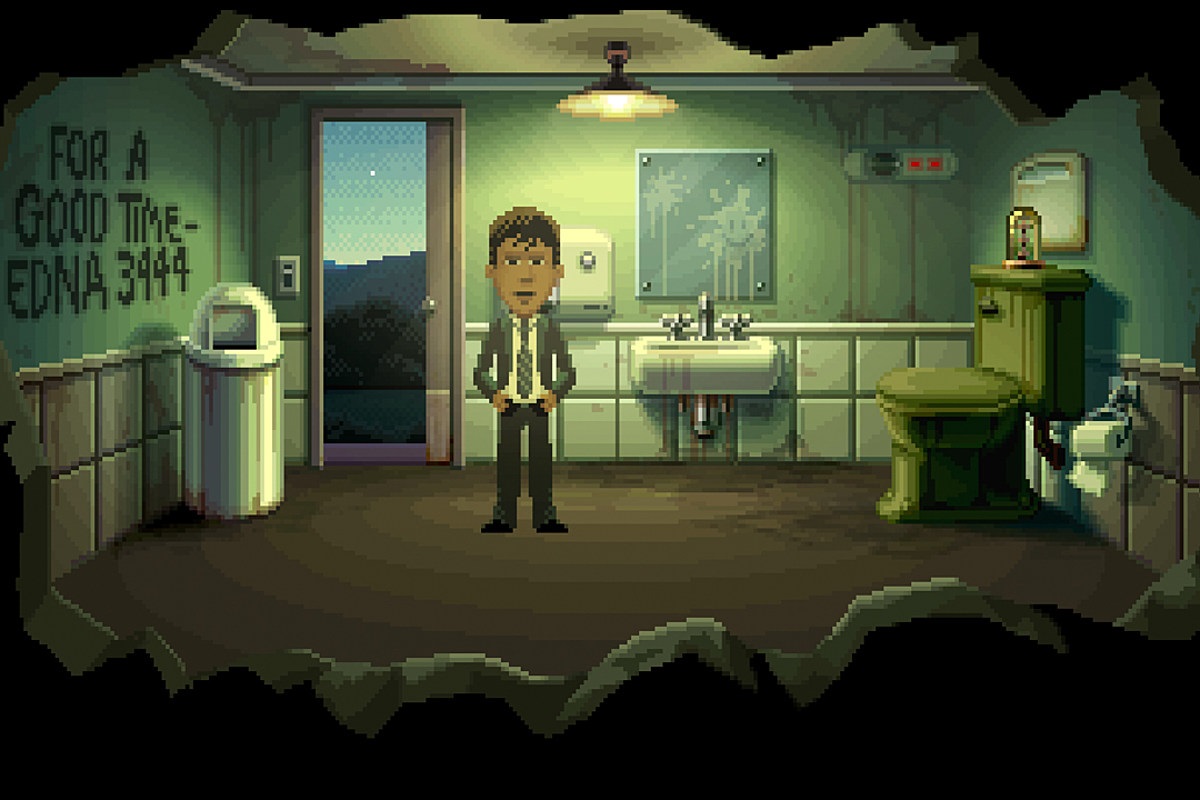
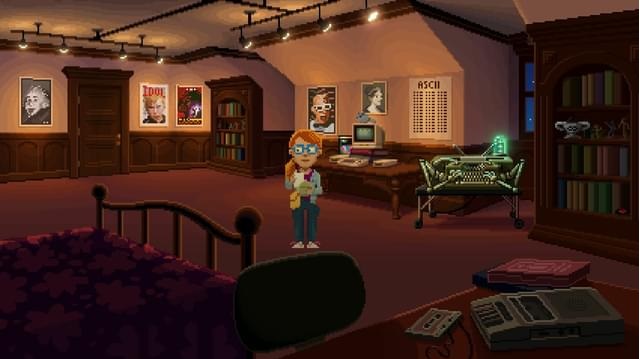
Chapter 3, however, blew up with playable characters, complexity, and locales so much that I started to feel a bit bewildered. At the same time, the puzzles start to feel a bit…forced.
- With one character, a page unrealistically flies away and out a window for no better reason than “gotta have puzzles.”
- I have to do some truly convoluted stuff to get printer ink, and I really don’t want to or care to.
- For some reason I have to feed popcorn to some animal, but I can’t use the *empty* swear jar as a vessel to hold the popcorn?
I get it; I’m bad at adventure game puzzles. But they frustrate me when they seem like unnecessary roadblocks just for the sake of having roadblocks. Maybe these puzzles are very intricately woven into the story that’s being told, but when I’m tackling them, I don’t feel like they add anything of value. Of course, I’m still stuck at Chapter 3…so, I could be just an ignorant dumb-dumb head, not knowing the final outcomes.
But it has gotten me wondering:
- Will I finish Thimbleweed Park? My enthusiasm substantially dipped after Chapter 2.
- Which is more important in adventure games: exploration or puzzles?
For people who love Thimbleweed, don’t worry, you are correct. The game is basically universally praised and highly rated anywhere there are reviews. I’m the odd man out with the bad opinion! Or, more likely, I am just the type of player who values exploration more than puzzles and got frustrated when the exploration ended and the puzzles ramped up.


That’s probably why when designing Betrayed Alliance, I wanted to have a more open feeling, similar to Quest for Glory 1 or the King’s Quest games. Here’s a puzzle box world, now go explore and have fun! Are there puzzles? Of course! Are some of them convoluted and contrived? Probably, but I’ll leave that to you to decide this May, when Book 1 is released as DOS freeware for the world to enjoy.
What’s most important to you in adventure games? Let me know!
 Slattstudio
Most designers are hyper critical of other games. I personally don’t play them too often because I always think of things to change and improve. Once you know how the trick is done it is hard to enjoy the magic again. You can never go home.
I’m glad you are honest about your feelings towards thimbleweed. I have a distaste for people who just say whatever is politically expedient rather than the truth!
Keep up the good work!
-Michaelplzno
LikeLike
I kind of regret posting negativity about another game, as I don’t really want to be associated with that kind of vibe, but it is my honest take and it does, I think, exemplify how different players value different things in games. Thanks for the kind comment!
LikeLike
Posting this stuff makes you more relatable, in my opinion. Because
every gamedev hides their “negativity,” it kind of makes everyone look
like a hive mind. But honest critique isn’t “negativity” in my opinion.
By telling people how we really feel we are showing them respect, rather
than hiding the truth to make them like us. If Thimbleweed were perfect,
why would you want to make your own game? I’m excited to try games that
are different! I wish more gamedevs would be honest about their critiques.
-Michaelplzno
LikeLike
Totally agree with you. That’s my they are called adventure games and not puzzle games. Puzzles, or better call them problems, should be there of course, but they must totally serve the adventure, the exploration, the atmosphere. If they start to be disconnected, like the examples you brought up in Thimbleweed chapter 3, they are a defect in game design.
LikeLike